
Local delivery and last-mile delivery have become a big part of how restaurants leave a lasting impression. Customers want their food to be fast, fresh, and hassle-free, and most places are still struggling to meet these expectations. If you understand how these two parts of delivery work and have a solid delivery dispatch system in place which can handle both in-house and third-party drivers. You can improve speed, reduce mistakes, and make the whole experience smoother for everyone, ultimately creating a loyal customer base.
What Is Local Delivery for Restaurants?
Local delivery basically means delivering food to customers who live close by. Most restaurants already do this, but many still struggle with managing it well. Local delivery might seem easy at first, but it requires coordination between the kitchen, drivers, and the systems you use.
How Local Delivery Usually Works?
- Customer places an order through your online ordering website, app, phone call, or a 3rd party delivery app
- Restaurants accept the order
- The kitchen prepares the food
- A driver, either from your team or a delivery partner from the 3rd party platform, picks it up
- Food reaches the customer’s door within a short period of time
Why Local Delivery Matters?
- Faster delivery times keep food tasting better
- Better control over customer experience
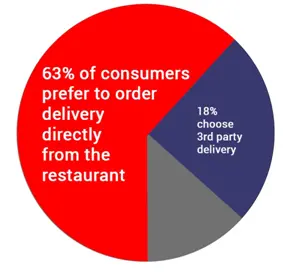
- More direct orders, which usually means more profit
- Builds a loyal local customer base
Challenges You May Face With Local Delivery
- Managing drivers during peak times
- Handling delays due to traffic
- Making sure the food stays warm
- Providing customers with a consistent experience
Some restaurants underestimate these challenges until they start scaling delivery.
What Is Last-Mile Delivery for Restaurants?
Last-mile delivery is the final stretch of the journey, the moment the order leaves the restaurant and shows up at the customer’s door. This is the part customers remember most, so even small issues can make a big difference.
Why Is Last Mile Delivery So Important?
- Customers judge everything by the final delivery
- Any delay feels like the restaurant’s fault
- Incorrect handoff leads to refund requests and a bad reputation
- A smooth last-mile delivery creates repeat orders and a loyal customer base
This is the part that determines whether your customer comes back or not.
Local Delivery vs Last Mile Delivery
People often mix these two terms, but they are not quite the same.
Local Delivery
- Focuses on the coverage area
- Deals with the question of who delivers the order
- Includes decisions like in-house delivery or third-party platform delivery
Last Mile Delivery
- Focuses on what happens right before the customer receives the food
- Deals with speed, food freshness, accuracy, updates and the end part of the customer experience
You need both to work properly if you want a reliable delivery operation and want to build a loyal customer base & bring in more repeat orders.
Why Last-Mile Delivery Can Be Complicated?
Even well-run restaurants struggle here. A few common issues:
- Traffic delays that nobody can predict
- Incorrect or incomplete addresses
- Drivers are missing pickup times
- Packaging that does not protect the food
- Poor coordination between the front of house and drivers
- Weather situations that slow everything down
Small mistakes add up and affect your ratings quickly.
Benefits of Improving Local and Last Mile Delivery
If you get these two areas under control, the benefits are pretty big:
- Happier customers
- More repeat orders
- Fewer cancellations and refunds
- Better food quality upon arrival
- Lower stress for staff
- Faster kitchen workflow
- Stronger brand reputation
A smooth delivery system feels almost invisible to the customer, which is the goal.
Choosing the Right Delivery Model
Restaurants usually choose one of three approaches. 1. Fully In-House Delivery
- Total control
- No commission fees
- Better customer experience
- More responsibilities for the restaurant
- Requires proper scheduling and training
2. Third Party Delivery
- No need to hire drivers
- Easy to set up
- Comes with high commission fees
- Less control over timing and food handling
3. Hybrid Model (Most Efficient)
This is becoming the most common choice.
- Mix of in-house and third-party drivers
- Flexibility to manage peak hours
- Lower overall delivery cost
- Better customer experience
Restaurants use in-house drivers for nearby deliveries and third-party riders when volume is high. It is a smart balance.
How Restaurants Can Improve Last-Mile and Local Delivery?
You can make noticeable improvements by focusing on a few core areas.
- Improve Prep Time Accuracy
Incorrect prep time leads to drivers waiting or arriving late.
- Invest in Good Packaging
Packaging influences temperature and food quality more than most people realize.
- Track Drivers in Real Time
It helps with communication and reduces customer complaints.
- Use Smart Dispatching
Automation can assign orders to the best driver based on distance and availability. Techryde delivery dispatch system can manage both in-house and 3rd party delivery drivers from one dashboard and even recommend the cheaper choice between them.
- Verify Delivery Addresses
This prevents delays and failed deliveries.
- Improve Handoff Process
A quick check before the order leaves can reduce the biggest errors.
- Prepare for Peak Hours
Small adjustments in workflow make high-volume periods much easier to handle.
Technology That Helps With Delivery
Technology plays a big role in successful delivery operations. Useful tools include:
- 3rd Party Order aggregation
- Live driver tracking
- Smart dispatch systems
- Route optimization
These systems reduce manual work and make deliveries more predictable.
How TechRyde Supports Local and Last Mile Delivery?
TechRyde provides a delivery dispatch system designed to simplify delivery operations for restaurants. It works for both in-house drivers and third-party providers, all in one place. What Restaurants Get
- Real-time tracking
- Automated dispatch
- Route optimization as per live weather and traffic conditions
- Predictive prep times
- Cost comparison for 3rd party and in-house driver
- Integration with existing POS and delivery apps
- Unified dashboard for all delivery operations
- Visibility of every driver
- Automatic cost comparison for in-house vs third-party delivery
This helps restaurants control costs, reduce delays, and keep service consistent.
Takeaway
Local and last-mile delivery have become essential for restaurants today. Customers expect quick and reliable delivery, and restaurants that improve these areas see better ratings and more repeat orders. With the right tools and systems, you can reduce errors, cut delivery costs, and offer a better experience to customers. Want to know more or need help? Contact us, and we will guide you.