
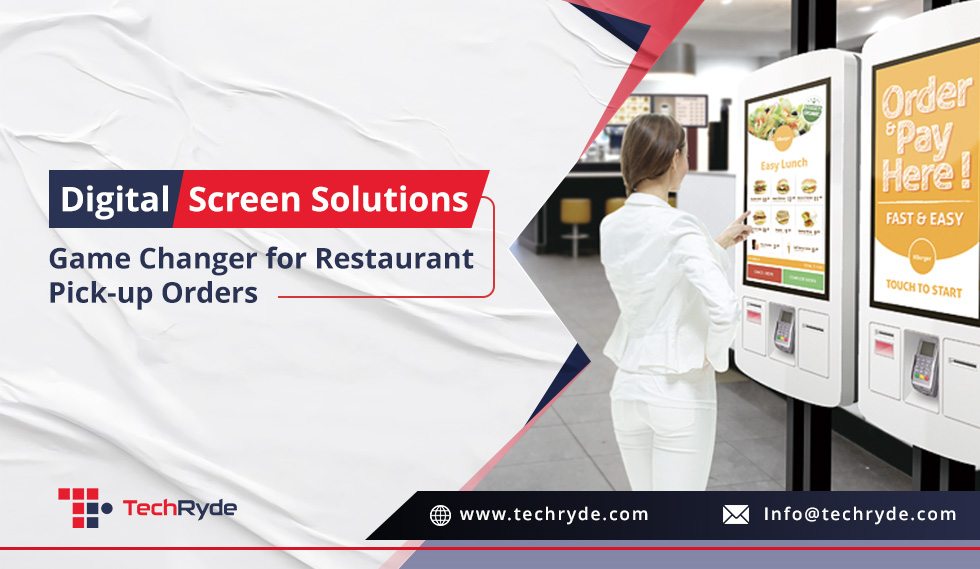
Restaurant pickup used to be pretty simple.
A few online orders here and there. Someone at the counter calling out names. Staff manually checking receipts. It worked because the volume was manageable.
That is not really the case anymore.
Now restaurants are juggling pickup orders from websites, apps, third-party marketplaces, and direct ordering systems all at once. During rush hours, pickup sections can become chaotic very quickly if operations are not organized properly.
You have customers standing near the counter waiting for updates, delivery drivers coming in nonstop, staff trying to locate bags, and kitchen teams pushing out orders as fast as possible.
This is where digital screen solutions and kitchen display systems are working together to make a real operational difference.
Instead of relying on constant verbal communication, restaurants are starting to use digital pickup displays to create more visibility and structure around the entire pickup process.
Why Pickup Operations Are Getting Harder To Manage?
A lot of restaurants underestimate how complicated pickup operations have become.
The issue is not only order volume. It is the number of moving parts involved nowadays and managing different order streams.
A single kitchen might simultaneously handle:
- Dine-in orders
- Pickup orders
- Delivery apps
- Third-party marketplaces (Uber Eats, DoorDash, etc.)
And every channel has different timing expectations.
The biggest problem is that many restaurants are still trying to coordinate all of this manually.
That usually leads to:
- Customers asking staff for updates every few minutes
- Congested pickup counters
- Orders sitting too long
- Wrong order handoffs
- Delays during peak periods
At smaller scale, restaurants can sometimes manage this manually. But once pickup volume starts increasing consistently, the system becomes harder to control.
What Are Digital Screen Solutions for Pickup Orders?
Digital screen solutions are basically customer-facing displays that show live order information during pickup.
You have probably seen them already in some QSRs or modern fast casual restaurants.
The screens usually show:
- Order numbers
- Customer names
- Pickup status
- Ready notifications
These systems are connected with:
- POS systems
- Kitchen Display Systems
- Online ordering touchpoints
So when the kitchen updates an order, the pickup display updates automatically.
Simple concept honestly, but operationally it solves a lot of unnecessary friction.
Instead of customers crowding around employees asking for updates, they can just check the screen themselves.
How Digital Screen Solutions Make Restaurant Pick-up Orders Seamless?
1. Customers Get Better Visibility into Their Orders
One thing that frustrates customers during pickup is uncertainty.
Most people do not mind waiting a few extra minutes if they actually know what is happening.
The problem starts when customers have no visibility into:
- Whether the order is still cooking
- Whether it is delayed
- Or whether it is already ready for pickup
Without visibility, customers naturally start asking staff for updates, which slows operations down even more.
Digital pickup screens reduce a lot of that friction because customers can track order progress visually.
And honestly, this changes the feel of the operation more than people realize.
The environment immediately feels more organized.
2. Pickup Counters Become Less Chaotic
Anyone who has worked in a busy restaurant knows how chaotic pickup areas can become.
You have:
- Customers waiting near the counter
- Drivers walking in constantly
- Employees calling names repeatedly
- Bags piling up
During rush periods, the counter area often turns into operational congestion.
Digital screen solutions help organize traffic flow better because customers are not fully dependent on verbal updates anymore.
Instead of surrounding the pickup counter waiting for their order, people can simply monitor the display.
That reduces:
- Counter congestion
- Staff interruptions
- Communication overload
- Pickup confusion
It sounds like a small operational change, but it improves workflow significantly during busy hours.
3. Staff Spend Less Time Performing Repetitive Tasks
One underrated issue in pickup operations is how much time staff spend repeating the same answers.
Questions like:
- “Is my order ready?”
- “How much longer?”
- “Did you already call my name?”
Individually, these interactions seem small. But during peak periods they constantly interrupt workflow.
Employees stop what they are doing to check tickets, look for bags, or communicate with the kitchen.
Digital screen systems remove a large percentage of these interruptions automatically.
Once the kitchen updates the order status, the information becomes visible immediately on the customer-facing screen.
This allows employees to focus more on operations instead of repeatedly managing pickup communication.
4. Order Handoffs Become More Organized
A lot of pickup mistakes happen during handoff.
Restaurants get busy, completed bags start stacking up, and suddenly staff are searching through multiple orders while customers wait at the counter.
That is when:
- Wrong orders get handed out
- Items get missed
- Delays start building up
Digital screens help organize the process better because completed orders are displayed clearly alongside customer names or order numbers.
This makes it easier for both customers and employees to identify the correct order quickly.
Operationally, this improves:
- Accuracy
- Pickup speed
- Workflow consistency
- Customer confidence
And fewer mistakes also means fewer remakes and operational slowdowns later.
5. The Pickup Experience Feels Faster
Interestingly, digital visibility often improves perceived wait times even when actual preparation time stays the same.
When customers can see their order progressing through the system, the experience feels more transparent and controlled.
Without updates, even a short wait can feel frustrating.
This matters because pickup is heavily experience-driven now. Customers compare pickup experiences between restaurants constantly, especially with how common online ordering has become.
Restaurants that create smoother and more predictable pickup workflows usually leave a stronger impression overall.
Why Digital Screen Solutions Are Becoming a Necessity?
A few years ago, pickup operations were secondary for many restaurants.
Now pickup is a core operational channel.
And with higher order volume comes higher coordination complexity.
Restaurants are realizing that manual communication alone cannot efficiently support:
- Large pickup volume
- Multi-channel ordering
- Faster customer expectations
- Peak-hour operational pressure
Digital screen solutions help create structure inside these increasingly busy workflows.
Not by replacing employees, but by reducing unnecessary communication friction throughout the operation.
Conclusion
Pickup operations are only becoming more important for restaurants.
But as order volume grows, so do the coordination challenges around communication, visibility, and order handoff efficiency.
Digital screen solutions help restaurants create more organized pickup workflows by improving operational visibility for both staff and customers.
The biggest advantage is not just speed. It enhances customer experience and operational clarity.
And in high-volume restaurant environments, clarity usually leads to better efficiency, smoother service, and more profit.
Want to improve pickup coordination and reduce operational chaos during busy service periods?
Contact the experts at TechRyde to explore how digital screen solutions can help your business create faster, more organized, and more efficient operations.