
Last-mile delivery fulfillment is more important than most restaurants might think. Customers now expect fast, accurate, and smooth delivery every time they order food, no matter how far they are ordering from.
In this guide, we break down everything restaurant owners need to know about last mile delivery. You will understand how it works, why it is so challenging, and what you can do to improve it without increasing costs.
What Is Last Mile Delivery for Restaurants?
Last mile delivery refers to the final step of the food delivery process. It is the movement of the order from your restaurant to the customer’s doorstep. This step might look small, but it has the biggest impact on the customer experience and what drives repeat customers.
If something goes wrong on the final mile, the entire order feels ruined. Hot food becomes lukewarm. Cold or frozen food melts. Time-sensitive dishes lose quality.
That is why restaurants today are focusing more on improving this stage of the food delivery.
Why Last Mile Delivery Is Such a Big Challenge?
Most problems in delivery happen during the last mile because it is unpredictable. Some issues you cannot control, like the weather or traffic. Others come from the delivery setup itself.
The following are the biggest challenges restaurants face:
- Slow or inconsistent delivery times
Drivers face traffic, wrong turns, or unexpected delays. Customers get frustrated very quickly when an order arrives late.
- Food quality is dropping during travel
Packaging and travel time affect temperature, freshness, and appearance.
- Multiple delivery channels to manage
You may have in house drivers, third party apps, or both. Handling all of them separately makes work harder for staff.
- Communication gaps
When customers cannot track their order or contact anyone, they lose trust in your restaurant.
- High third party delivery charges
Apps take commissions that reduce your profit on every order. This makes it harder to rely on delivery as a strong revenue channel.
Why Last Mile Delivery Matters More Than Ever?
Customer behavior has shifted. People now order food more often, and they expect accuracy and speed every single time. Good delivery increases repeat orders. Bad delivery does the opposite.
If the customer opens the bag and everything looks perfect, they remember it. If something leaks, spills, or arrives late, they also remember it.
Most customers decide whether to order by reading reviews on apps. Delivery drivers become an extension of your brand.
If you reduce the average delivery time, you can complete more orders in a day. Faster routes create more capacity.
How Restaurants Can Improve Last Mile Delivery
Now let’s look at how you can improve this critical stage. The following are practical steps that any restaurant can start using.
- Use smarter delivery dispatch software
Routing and driver assignments are one of the biggest factors in delivery speed. A good delivery dispatch system picks the best driver, avoids traffic, and chooses the fastest route.
A delivery dispatch system can brings all your orders and delivery partners in house or third party into one dashboard. This makes it easier for staff to assign drivers, track status, and handle both in house and third party deliveries.
- Track drivers in real time
When you can see where your drivers are, you can manage delays better. You also give customers live tracking, which reduces complaints and increases trust.
- Improve your packaging
Good packaging keeps food hot or cold for longer. It also prevents spills and keeps dishes fresh. Packaging is one of the simplest ways to improve last mile delivery without adding cost.
- 4. Keep menus accurate everywhere
Wrong prices or unavailable items create delays before the order is even prepared. A central menu management system stops outdated items from showing on delivery apps.
In House vs Third Party Delivery: What Works Better for Last Mile?
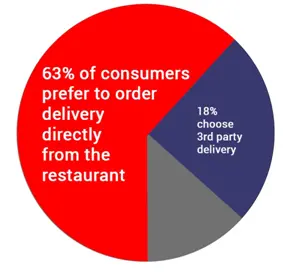
In house vs third party delivery, both models have strengths and weaknesses. Some restaurants prefer to handle delivery with their own fleet. Others rely fully on third party apps. And many choose hybrid models.
In-House Delivery
Pros |
Cons |
| Better control over customer experience | Extra Work |
| Drivers represent your brand | Higher cost to manage drivers |
| You avoid heavy commission fees | Training and scheduling challenges |
| Faster communication with customers | Need technology for routing and tracking |
| Easy to update menus and prices |
Third Party Delivery
Pros |
Cons |
| Easy to start without an upfront investment | High commission fees |
| Big customer reach | Less control over the delivery experience |
| No need to train drivers | Slower issue resolution |
| No need to manage logistics | Menu changes can take time |
What Most Restaurants Prefer in 2025?
The smartest approach is to use both. You use third party apps to reach more customers. At the same time, you use in house drivers for regular customers and high margin orders. This balance helps you grow revenue while controlling delivery quality.
How TechRyde Helps Restaurants Improve Last Mile Delivery?
TechRyde offers a delivery dispatch system that supports both in house drivers and third party fleets. Everything shows on one dashboard so your team does not need to switch between screens. The software also compares the cost of each delivery option and automatically assigns the cheapest and fastest choice.
You can track drivers, optimize routes, and improve the speed and accuracy of every delivery. This creates a stronger delivery experience without increasing operational load on staff.
Takeaway
Last mile delivery is where your restaurant’s reputation is made or broken. When you take control of routing, communication, packaging, and driver management, you can deliver faster and keep customers happy. Every improvement can increase your revenue and help you stand out.
Want to know more or book a live walkthrough?
Contact us and our team of experts will help you.